Understanding the 1 Graham Embroidery Font for Practical Machine Stitching
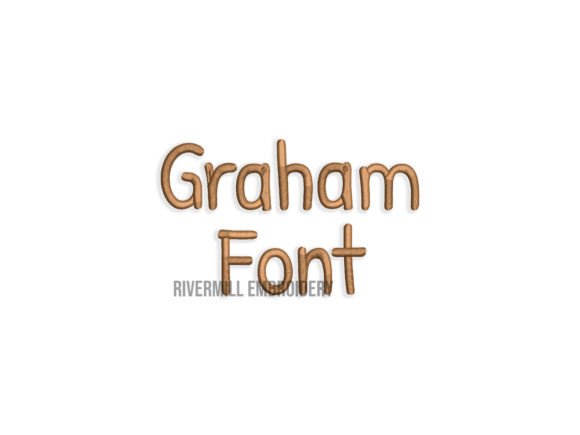
In the realm of machine embroidery, selecting the right typeface is often as critical as choosing the fabric or thread. The 1 Graham Embroidery Font represents a specific utility within this ecosystem, designed to offer clarity and consistency in lettering projects. Unlike decorative scripts that prioritize flair over legibility, this font set focuses on a clean, structured aesthetic suitable for a wide range of applications. It includes both uppercase and lowercase letters alongside numbers 0 through 9, all standardized to a one-inch size. For hobbyists and professionals alike who require precise, uniform text without the complexity of resizing algorithms, this resource provides a straightforward solution.
The technical foundation of the 1 Graham Embroidery Font lies in its format and stitch construction. Distributed primarily in PES format, it ensures compatibility with a broad spectrum of embroidery machines, particularly those from Brother, Baby Lock, and Innov-is brands. However, the versatility extends beyond a single brand; most modern embroidery software can convert these files into other necessary formats, allowing users to utilize the design across different hardware. Understanding the mechanics of how this font is constructed—specifically the stitch density and pull compensation—is essential for anyone evaluating whether it fits their current project needs.
Technical Specifications and Design Integrity
When evaluating an embroidery font, the most immediate metric is the stitch count and physical dimensions. The 1 Graham Embroidery Font is engineered with a fixed height of one inch. This standardization simplifies the planning process for projects where uniformity is paramount, such as monogramming sets, team uniforms, or coordinated home decor items. The provided specifications typically highlight the dimensions for the capital "A" and lowercase "a," serving as a benchmark for the entire set. While individual characters like "M" or "W" may occupy more horizontal space due to their structure, the vertical consistency remains constant across the 62-character set.
A critical aspect of this font is the stitch information available for review. Users are encouraged to consult the accompanying PDF documentation, which details the full dimensions for every letter and number. This transparency allows embroiderers to calculate the total hoop usage before committing to a design. For instance, if a project requires a long phrase, knowing the exact width of each character prevents the need for excessive hooping or awkward splitting of designs. The 1 Graham Embroidery Font avoids the common pitfall of variable sizing, where some letters might appear larger than others due to inconsistent scaling, ensuring a professional finish.
The stitch count for a one-inch version of this font is generally optimized for stability on various fabric weights. Unlike highly stylized fonts that rely on dense satin stitches which can pucker thin materials, the Graham style utilizes a balanced approach. This makes it adaptable for use on towels, t-shirts, and caps, provided the stabilizer choice is appropriate. The inclusion of numbers 0-9 expands its utility beyond simple names, making it viable for house numbers, anniversary dates, or inventory labeling where alphanumeric data is required.
Comparing Fixed-Size Fonts with Scalable Alternatives
In the broader market of embroidery resources, the 1 Graham Embroidery Font sits in contrast to fully scalable vector-based fonts. Scalable fonts allow users to resize text to any dimension within the software, theoretically offering infinite flexibility. However, this flexibility comes with tradeoffs. When a font is resized significantly, especially enlarged, the stitch density may become too loose, leading to gaps in the coverage. Conversely, shrinking a large design can result in overly dense stitching that causes fabric distortion or thread breakage.
The fixed one-inch nature of the 1 Graham Embroidery Font eliminates these variables. Because the design is pre-stitched at a specific size, the stitch count and density have been tested and verified for that exact dimension. For users who consistently work within a standard size range, this offers a reliability that dynamic resizing cannot guarantee. It removes the guesswork associated with adjusting pull compensation or re-sampling stitch patterns. If your workflow frequently involves one-inch lettering, this font acts as a specialized tool that performs better than a general-purpose scalable alternative.
However, there are situations where a fixed-size font presents limitations. If a project demands a two-inch logo or a half-inch label, the 1 Graham Embroidery Font would not be the direct choice without manual manipulation, which risks compromising the design integrity. In such cases, a true vector font or a multi-size font pack becomes the superior option. Therefore, the decision to use this specific font should hinge on the frequency of one-inch requirements in your portfolio. For occasional custom sizing, the rigidity of this format may feel restrictive, but for high-volume, consistent production, it offers efficiency and quality assurance.
Evaluating File Formats and Machine Compatibility
The distribution of the 1 Graham Embroidery Font in PES format addresses a significant portion of the consumer and professional market. PES is widely recognized for its robustness and ability to handle complex stitch sequences without corruption. This format supports a variety of commands that ensure the embroidery machine executes the design accurately, including jump stitches and color changes. For owners of Brother-compatible machines, this file type is native, meaning no conversion is necessary, reducing the risk of errors during the transfer process.
Despite the dominance of PES, the embroidery community utilizes a diverse array of machine languages, including DST, JEF, VIP, and EXP. While the primary download may focus on PES, the availability of multiple formats in many commercial bundles is a key factor in product evaluation. If a user operates a Janome, Husqvarna Viking, or Bernina machine, they will likely need to convert the PES file using third-party software. Most reputable conversion tools handle this transition well, preserving the stitch order and density of the original 1 Graham Embroidery Font. Nevertheless, users should be aware that conversion is an extra step that introduces a potential point of failure. A font sold natively in multiple formats offers immediate convenience, whereas a single-format file requires technical proficiency to adapt.
Furthermore, the compatibility of the font with embroidery editing software is another consideration. Many users prefer to edit designs before stitching, perhaps adding a background fill or adjusting the spacing between letters. The 1 Graham Embroidery Font is designed to be editable in standard software, allowing for minor adjustments while maintaining the core structure. This balance between a ready-to-stitch file and an editable asset makes it a practical choice for designers who need a base template but occasionally require customization.
Use Cases and Strategic Application
Determining when the 1 Graham Embroidery Font is the right choice involves analyzing the specific demands of the project. This font excels in scenarios requiring legibility and uniformity. For example, in corporate branding where employee name tags must look identical, the fixed size ensures that every tag adheres to the brand's visual standards. Similarly, in educational settings, creating class rosters or team jerseys often benefits from a font that does not vary in height, ensuring that names fit neatly into designated areas without overlapping.
Another strong use case is for home decor items where a subtle, classic look is desired. The clean lines of the Graham style complement traditional aesthetics without overwhelming the fabric texture. It is particularly effective on items like kitchen towels, napkins, or pillowcases where the text serves a functional or commemorative purpose rather than being the sole decorative element. The one-inch size is large enough to be easily read but small enough to fit comfortably within standard hoop sizes, minimizing the need for complex multi-hoop setups.
Conversely, there are situations where this font may not be the optimal solution. Projects requiring dramatic visual impact, such as large wall hangings or statement pieces, might benefit from a bolder, larger-scale font or a script style that adds artistic flair. Additionally, if the target audience prefers a modern, edgy aesthetic, the traditional structure of the 1 Graham Embroidery Font might feel too conservative. It is also less suitable for very small items, such as baby socks or tiny accessories, where a one-inch letter would dominate the surface area. In these instances, exploring smaller font sizes or more compact styles would yield better results.
Decision Factors for Embroidery Professionals
For adults aged 20–50 who are managing embroidery businesses or serious hobbies, the investment in digital assets like the 1 Graham Embroidery Font should be weighed against the time saved and the quality produced. The primary advantage is the reduction in setup time. Since the font is pre-sized and pre-tested, the embroiderer can move directly from digitizing the layout to stitching, bypassing the trial-and-error phase often associated with resizing generic fonts. This efficiency translates to higher throughput and consistent client satisfaction.
However, cost-effectiveness is also a consideration. Purchasing a single-size font limits the scope of future projects unless the user plans to acquire additional sizes later. Bundles that offer multiple sizes of the same font style often provide better long-term value, even if the initial cost is higher. Therefore, when comparing options, one should evaluate whether the one-inch limitation aligns with current and anticipated project needs. If the majority of work involves varied sizes, investing in a scalable font library might be a more strategic financial decision.
Ultimately, the 1 Graham Embroidery Font serves as a reliable tool within a larger toolkit. It is not a replacement for all typographic needs but rather a specialized instrument for specific tasks. By understanding its strengths in consistency and compatibility, as well as its limitations regarding size flexibility, embroiderers can make informed decisions that enhance their workflow. Whether used for personal projects or commercial orders, this font offers a dependable foundation for clear, professional-looking text, provided it is applied to projects where its fixed dimensions are an asset rather than a constraint.